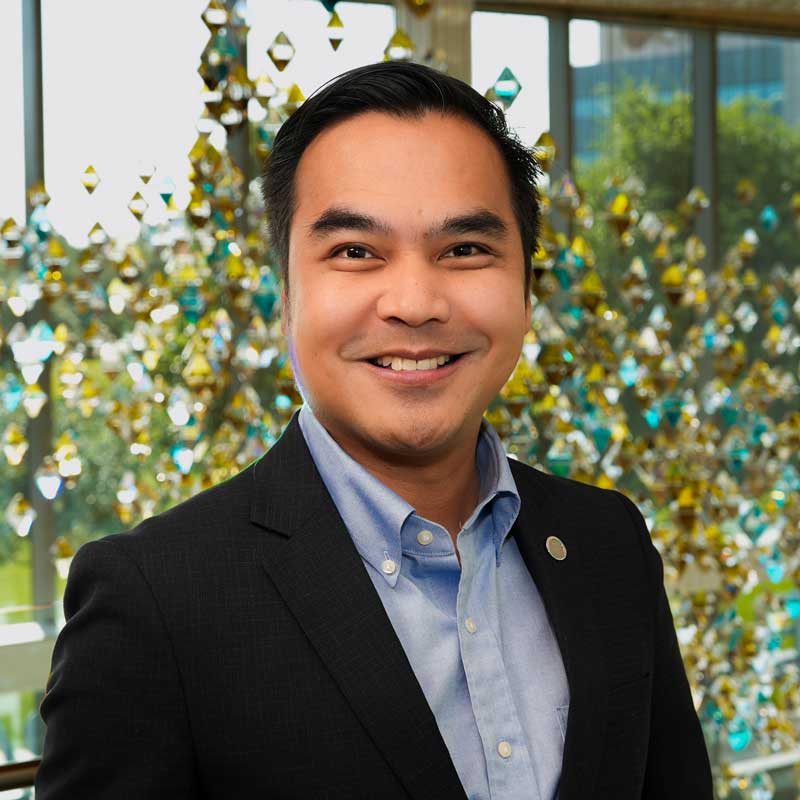
Michael Joseph “MJ” S. Dino
Titles:
Associate Professor, College of Nursing
What he does for UCF:
I joyfully serve as faculty in the College of Nursing, mentoring graduate nursing students and facilitating several courses, including AI, extended reality, and research. I enjoy leading studies and research at the intersection of nursing and technology, including human-computer interaction, simulation, artificial intelligence, robotics, extended realities (virtual and mixed environments), and what I call “gerontechnology” or technology for older adults. I design and explore these technologies to support student learning and care for older adults and vulnerable populations. Much of my work asks a simple question: How do we use emerging technology to make learning and caring more human, not less?
1. What made you want to call UCF home?
Coming from the Philippines, UCF’s welcoming, boundary-crossing spirit felt like home almost immediately. UCF treats people as humans and innovation as an invitation, not an exception. As one of the nation’s prominent research universities, UCF gave me a home to collaborate within and beyond nursing, on a larger scale.
2. What’s one small thing about UCF that makes you smile?
Hearing the battle cry, “Charge On!” everywhere never fails to make me smile. I feel a strong sense of purpose in improving self for others. The UCF community, students and faculty alike, serves our neighbors in ways that can make you forget, for a moment, that our work is also grounded in research. That sense of joy gets me every single time.
3. What does student success mean to you, and what is the most important way you contribute to it?
To me, student success is a form of “malasakit,” a Tagalog word and concept for a deep sense of caring for others. I want students and graduates to at least care for themselves and those around them. While they can master hard skills and technology, holding a patient’s hand with compassion requires “malasakit.” In my own simple way, I walk the talk by serving people and students as their mentor, guiding their curiosity into scholarship, and helping them become the leaders capable of shaping the future.
4. How does your research make a difference in our community and state?
My work in gerontechnology supports active aging by developing tools and implementing initiatives that help older adults stay healthy, independent, and connected. I strongly believe technology should reach people wherever they are, whether at their homes or in our communities across the Sunshine State.
5. What’s one thing you wish more people would know about the work you do?
Technology in nursing isn’t about replacing the human touch; rather, it’s meant to amplify human caring. When designed with care, technologies such as AI and extended realities can give nurses more time, more presence, and more interactions with the people they serve. The heart of my work has always been, and will always be, human.