Rebecca McNulty
Title:
Associate Instructional Designer
What she does for UCF:
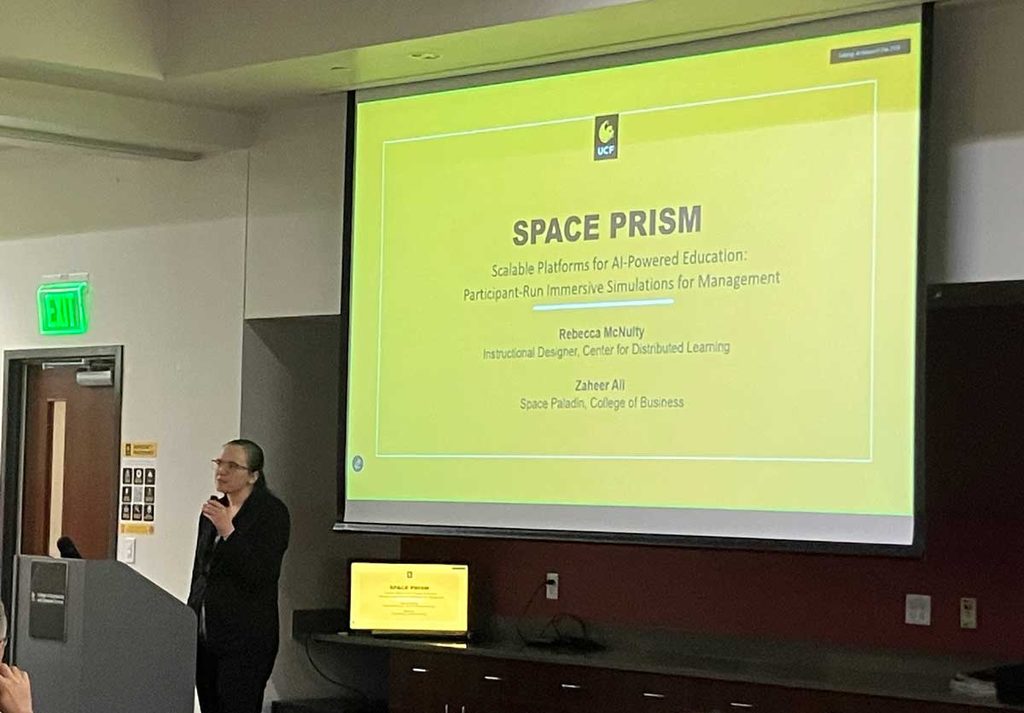
As an instructional designer at UCF’s Center for Distributed Learning (CDL), I collaborate with faculty to develop engaging digital learning experiences. My daily work also explores how artificial intelligence can support open educational practices.

1. What made you want to call UCF home?
UCF helped me to become a better teacher before I ever worked here.
When I was finishing my Ph.D., I was also teaching online and always looking for new ideas that I could put into practice. One place I turned was TOPcast, the Teaching Online Podcast that was produced at the time by UCF’s Center for Distributed Learning. I didn’t expect to end up working with the people I’d been learning from, and now I love being in a position to help the next instructor who’s trying to figure it all out.
What drew me here was how seriously CDL takes online learning and how generously it shares what it knows. Joining felt personal because I’d already applied so much of the advice to my own teaching.
Now, I get to call those same people my colleagues. It’s still a little surreal.
2. What’s one small thing about UCF that still makes you smile?
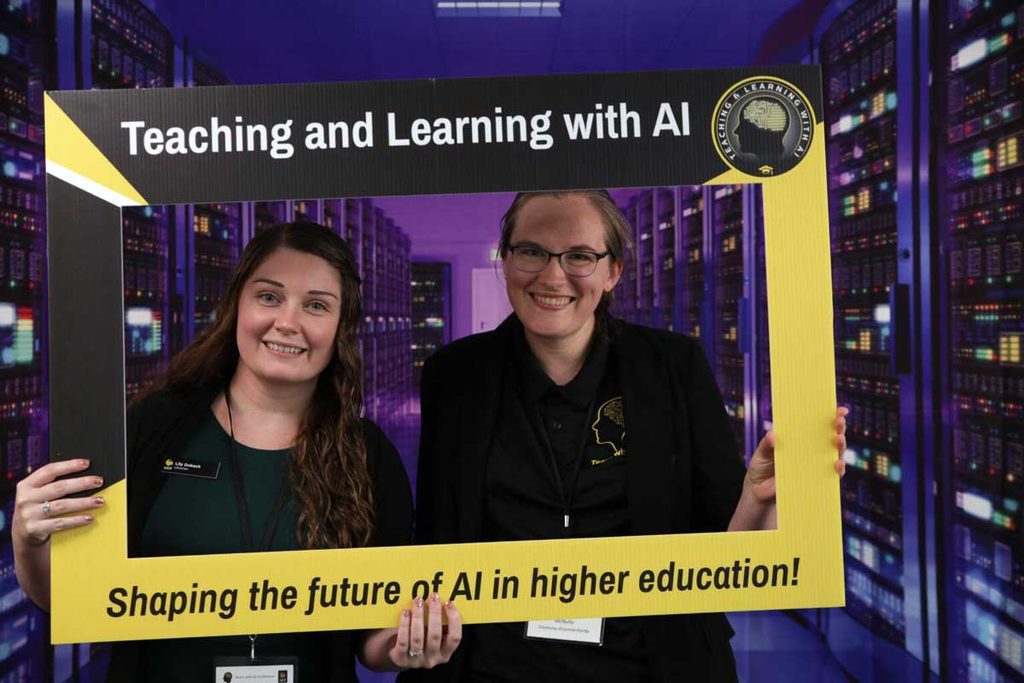
The ducks! They’ve taken over my bookshelves: one from a digital accessibility escape room, another from a colleague as a birthday gift, a few from presenting at our Teach with AI conferences, and more.
Anywhere else, this might seem like too many ducks. At UCF, people understand.
3. What does student success mean to you, and what is the most important way you contribute to it?
For me, student success means every student is able to show off what they’ve learned in a way that works best for them. I want to leave room for the student who asks, “Could I show you this another way?” That might mean demonstrating their learning in ways we hadn’t initially thought about. Students should get to surprise us with what they can do.
My most important contribution is helping instructors to find room for student choice in the digital learning space. We look at what an assignment needs to demonstrate and what learners could choose for themselves. We want students to feel trusted to make those decisions.
4. When you collaborate with faculty to design a course, how do you turn their ideas into learning experiences that engage students?
We start with blue-sky dreaming. I want to hear the idea before it gets dismissed as too hard or too complicated. If we can describe something together, we can probably find a way to make it work.
Teaching faculty know their subject and their students. As an instructional designer, I help turn “This is what students should be able to do” into opportunities to practice, receive feedback, and try again. Together, we work through what those opportunities could be online. I might suggest an approach, and they’ll connect it to something in their field that gives us even more to explore. That back-and-forth is my favorite.
5. What excites you most about how AI can help students think, create, and make meaning?
What excites me most is the chance to make learning more personalized and give students more ways to show what they know. At CDL, we’re prototyping immersive, AI-supported experiences where students can explore situations connected to their career goals, make real decisions, and see the consequences unfold in real time. There’s room to test an idea, to reconsider an assumption, and, most importantly, to try again.
Those experiences can help students to connect what they’re learning to their own interests and ambitions. I’m especially excited to explore pathways for students to practice work they might do in the future, discover what matters most to them, and begin to imagine the kind of professional they might want to become.