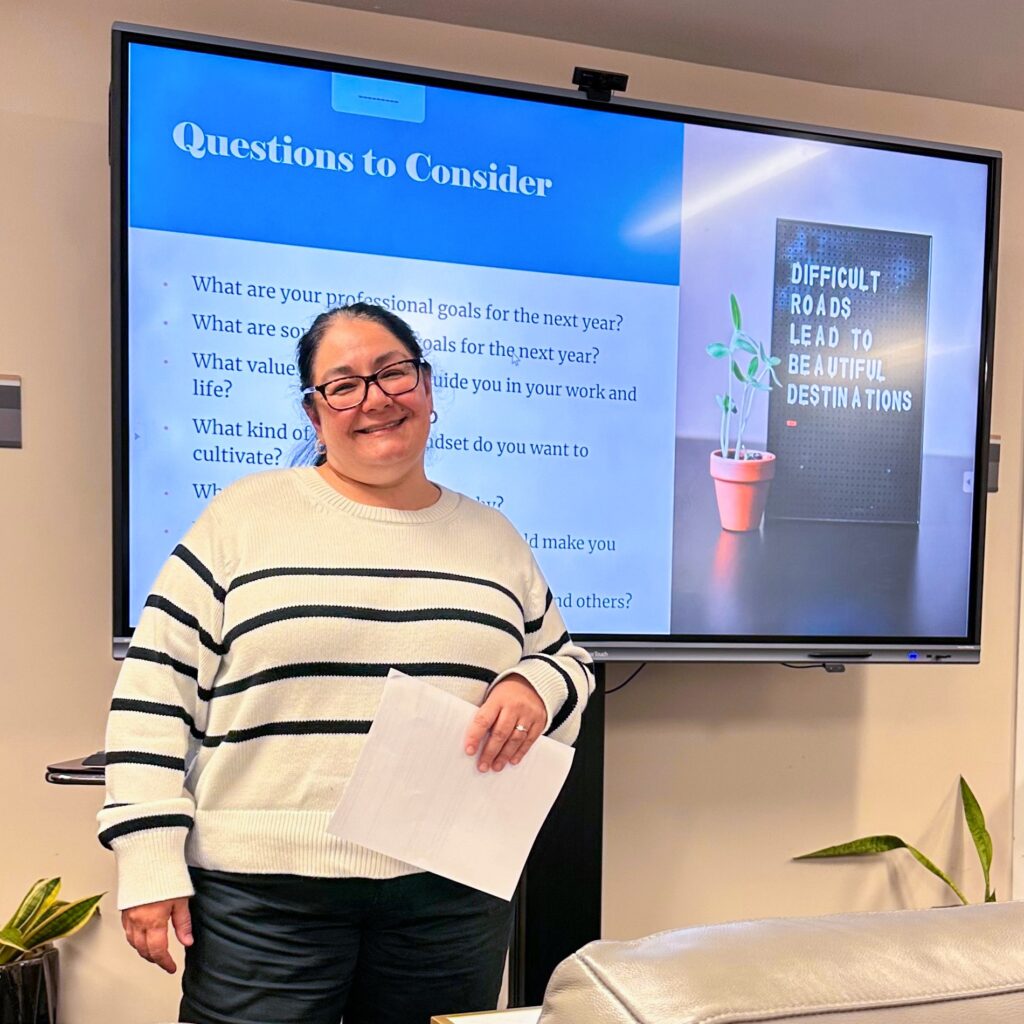
Nataly Larenas
Title:
Project Director, Project Harmony | Marriage and Family Research Institute
Years at UCF:
21
UCF Degrees:
B.S. Event Management, Rosen College of Hospitality Management (2020)
What she does for MFRI:
I guide our team, build community partnerships, and work alongside a dedicated team to deliver relationship education and family-strengthening programs for couples, parents, and first responders in our community. My goal is to help ensure this work reaches families in meaningful and accessible ways. I am deeply committed to the long-term, generational impact of relationship education, and believe that strengthening couples and families today helps create healthier, more resilient communities for years to come.
1. What made you want to call UCF home?
UCF has always felt like a place where people are given the opportunity to grow. I started my career here and quickly found a strong sense of community, and over the years I’ve been fortunate to grow not only professionally but also as a student while earning my degree. Being part of an institution that invests in people and allows you to make a meaningful difference in the lives of others is what has truly made UCF feel like home to me.
2. What’s one small thing about UCF that still makes you smile?
The small moments of connection. I enjoy hearing from former students and staff who have grown in their careers and learning about what they’re doing professionally. I love walking across campus and seeing students figuring things out and finding their path and running into colleagues who are still here and knowing we can still support one another. Now, seeing my own daughter here and enjoying a campus full of life, learning opportunities, and growth makes it even more special.
3. What’s one thing you wish more people would know about the work you do?
I wish more people knew that relationship education is really about strengthening everyday connections. Our programs aren’t only for couples or families who are experiencing distress; they’re about learning new ways to communicate, understand one another, and navigate life together. Those skills don’t just help in romantic relationships; they can improve how we connect with our children, colleagues, friends, and the people around us every day.
4. Outside of work, what’s something that brings you joy or helps you recharge?
Spending time with the people I love is what brings me the most joy. My family means the world to me, along with my extended family and friends who have become family, and I’m lucky to share so many special moments with them. I also love being creative, hosting gatherings centered around good food and conversation, and traveling and exploring new places. And my animals, including our dogs and two goats, bring me a sense of peace and calm, something about being around them and just going for walks helps me reset and recharge.
5. What is a creative way couples can nourish and affirm their relationship to maintain the spirit of Valentine’s Day (expression of love) year-round?
A creative way couples can keep the spirit of Valentine’s Day alive year-round is by building small, meaningful habits of connection. That could be setting aside time each week to talk without distractions, trying something new together, or simply expressing appreciation more often. In our work at Project Harmony and the Marriage & Family Research Institute, we see how these small, intentional efforts help couples stay connected and strengthen their relationships over time. Love is often sustained not by big gestures, but by the little things we do consistently.
Kathleen Hawkins
Title:
Co-Investigator, Project Harmony | Marriage and Family Research Institute
Years at UCF:
10
UCF Degrees:
B.S. Psychology (2013), M.A. Marriage, Couples, and Family Therapy (2016)
What she does for MFRI:
My role includes helping design and adapt relationship education curricula, ensuring fidelity to evidence-based models, supporting implementation, and contributing to evaluation efforts. I also collaborate with community partners.

1. What made you want to call UCF home?
There is something powerful about supporting individual couples in a workshop one day and contributing to research that informs policy, funding priorities, and broader systems of care the next. The opportunity to translate relationship science into both direct service and long-term systemic change is deeply meaningful.
2. What’s one small thing about UCF that still makes you smile?
The ducks. Every once in a while, I’ll see a random rubber duck somewhere on campus, and it instantly makes me smile. It’s such a simple symbol, but it represents one of UCF’s most beloved traditions and the shared memories that connect generations of Knights.
3. What’s one thing you wish more people would know about the work you do?
I wish more people understood how impactful preventative relationship education can be. We often think of support only in moments of crisis. But research shows that when couples learn communication, conflict repair, and emotional regulation skills early, they create stability not just for themselves, but for their children as well. Strong relationships are one of the greatest protective factors for family wellbeing, and our work is designed to strengthen those foundations before problems escalate
4. Outside of work, what’s something that brings you joy or helps you recharge?
Anyone who knows me will tell you that unstructured time with my family, especially when it involves the ocean, brings me the most joy. Whether it’s a laughter-filled kayaking adventure, scuba/free diving, boating, or simply stretching out on the beach, being near the ocean with the people I love has a way of resetting me. It’s where I recharge, breathe a little deeper, and feel most like myself.
5. What is a creative way couples can nourish and affirm their relationship to maintain the spirit of Valentine’s Day (expression of love) year-round?
Prioritize fun. As life gets busier, fun is often the first thing to disappear; replaced by logistics, responsibilities, and exhaustion. But shared fun is not optional in a healthy relationship; it’s protective. Whether it’s telling a terrible joke, dancing in the kitchen for 30 seconds, or planning a trip you’ve both been dreaming about, fun builds friendship. And friendship is the foundation of long-term love. I often tell couples that fun is like sunscreen for a relationship. You may not notice it in the moment, but it quietly protects you from the slow burn of stress, resentment, and routine.